
The Geography of Service
A Coast to Coast Study in What Makes Physical Retail Better Than Your Couch

My best friend came to visit a couple of weeks ago, and I took a PTO day. No meetings. No Slack notifications pinging like a heart monitor. The world was ours. It was her second visit since I moved, and I don’t take repeat trips lightly. The day had to deliver. I thought we’d go where shopping hits the way it does in the movies.
Cue my internal narrator:
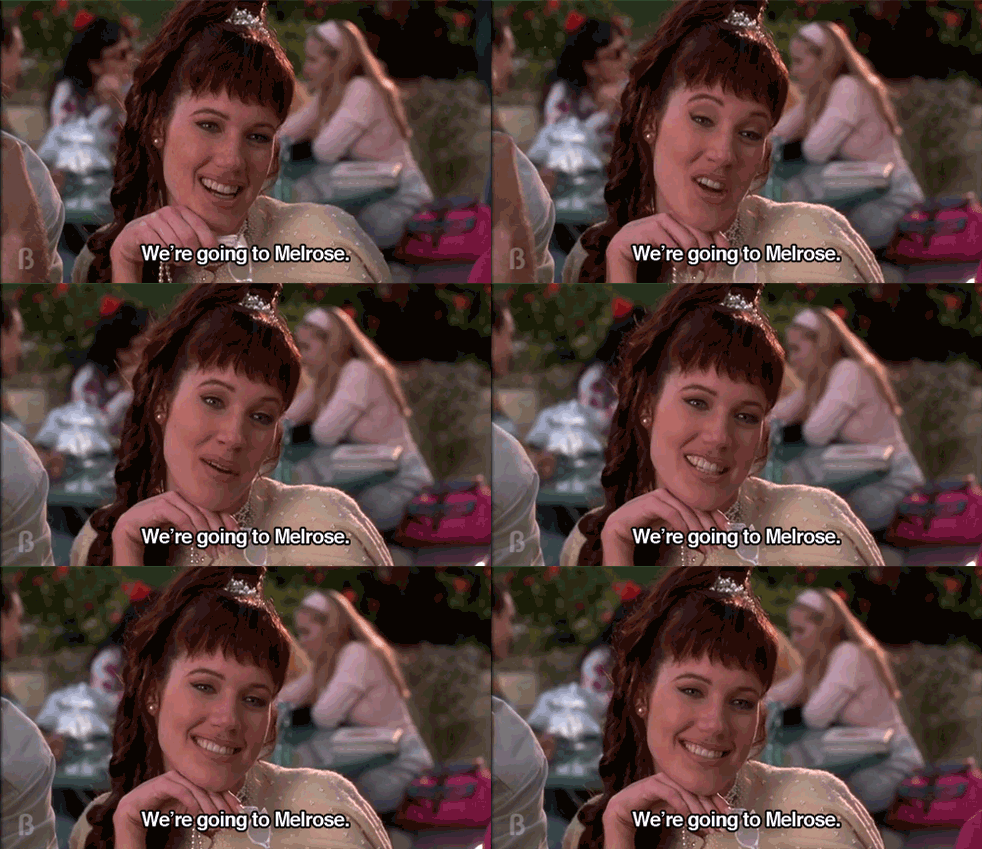
Between the morning lag, a pharmacy detour, and ninety minutes on the 405, it took half a day just to arrive. By the time we pulled into a garage, I wasn’t just hoping for a good experience; I was demanding a return on investment. We applied the mandatory California layer of SPF 50, stepped onto the pavement, and let our credit cards know they were about to be drafted into active service.
At this point, the day owed us.
I’ve felt this same deficit while maneuvering through gray piles of slush in sub-zero New York winters. The geography is different, but the ultimatum is identical: If I have braved the physical world to get here, you'd best be better than my couch.
The Tax to Entry
Physical retail is no longer the default. With legacy names like Saks restructuring and footprints shrinking in real time, there is no room for mediocrity. Some brands spent decades perfecting the craft of the stay, only to be reshaped by a world that moved online overnight. Others are still relearning how to open themselves back up after years behind a screen.
And after spending real time shopping in both Los Angeles and New York, I’ve realized something: neither coast has solved it entirely, and neither is behind. They simply optimize for different parts of the experience. The stores that justify the effort, the ones that make the trip feel worthwhile instead of exhausting, all share a small set of disciplines.
What follows are five of them.
1. The Warm Welcome
The first thirty seconds tell you how a store trains its team. On Melrose, we felt it immediately. In more than one store, the interaction began with a real question, not a script. We said we were browsing, and instead of steering us toward a rack, she asked how we were spending the day. The question was simple, but it reset the tone. My New York friend, who typically shops with speed and minimal engagement, slowed down and leaned in. We stayed longer because the exchange felt genuine, not performative.
Why It Matters: In the right environment, when you actually have the time, a genuine greeting makes your shoulders drop. You stop calculating how fast you can get in and out. You allow yourself to look. The store stops feeling like a transaction waiting to happen and starts feeling like a place you can actually be. From the brand side, that shift changes everything that happens next. They try things they did not plan to try. Even if nothing is purchased, you remember how it felt.
2. The Discipline of Distance
Conversely, some of the best retail experiences are the ones where you are left entirely alone. In many New York stores, the greeting is quieter. Sometimes the acknowledgment is barely there. To someone unfamiliar, it can read as indifference. But spend enough time shopping there and you recognize the pattern. Most people walking through that door are on a mission. They are squeezing in a return before dinner or hunting one specific item before the train arrives. The restraint isn’t indifference. It’s trust. Trust that you can find your way through the rack without being steered. Space becomes the service.
Why It Matters: For most shoppers, distance is a relief. You don’t have to perform the "just browsing" ritual or navigate an unwanted pitch. You keep your momentum. For a brand, this restraint signals a quiet confidence: the product is strong enough to stand on its own without a narrated tour. When the interaction finally does happen, it’s because the customer requested it, which makes the help feel earned, not inserted.
3. Accuracy Over Urgency
How many times have you asked a server what to order, and they immediately steer you to the most expensive thing on the menu? You can feel the agenda before the dish even hits the table.
On Melrose, I saw the opposite.
When the store did not have what we came for, there was no attempt to manufacture a “close enough” option just to keep momentum alive. She told us plainly what wasn’t there, mentioned another location that might have something different, flagged an upcoming launch, and let the information stand on its own. Her confidence was unmistakable. And because it was honest, I trusted everything else in the store more.
Why It Matters: As a customer, you can tell when an associate is pushing instead of helping. When a store refuses to scramble, it earns your respect, and that respect travels. For brands, that trust compounds. If I believe you when you tell me what you don’t have, I am far more likely to believe you when you tell me what I should want.
4. An Experienced Hunter
Every great department store has one, and New York is full of them. Diane at Bloomingdale’s. Marco at Saks. If Barney’s were still open, Eileen would still be hustling. They’ve been there long enough to know when a brand quietly changed its fit and which store has the last size eight before it disappears. Commission sharpened them. Years on the floor refined them.
They move with purpose, not pressure. When they approach you, it’s because they see an opportunity to solve something, not because they’re bored. They will not walk a sale. They will call another store, check the back room, and text you three days later when it lands. And yes, this is why their number is on speed dial.
Why It Matters: As a customer, this is addictive. You feel backed. You feel like someone is on your side of the counter, not just behind it. You stop shopping the entire market because someone is already doing that for you. For the brand, this is retention in its purest form. When someone knows your size, your history, and will chase an item down before you even ask, you don’t price compare. You return to the person.
5. The Neutral Gaze
We’ve all seen the scene in Pretty Woman. “You work on commission, right? Big mistake. Huge.” It’s the cinematic version of retail humiliation. On Melrose, it felt like that era had quietly expired.
In the luxury stores, no one sized us up. No one scanned our sneakers and decided what rack we deserved. The suggestions were based on how we were reacting to the fabric, how long we lingered on a silhouette, and what we kept reaching for. Not on what they assumed we could afford. It felt generous. Even if I wasn’t about to drop an entire paycheck on a handbag, no one made me feel like I didn’t belong in the room with it.
Why It Matters: Judgment is the fastest way to lose a customer. When someone feels financially profiled, they shut down. They mentally downgrade what they think they’re “allowed” to consider. When that gaze is neutral, the opposite happens. They explore without self-consciousness. They try on the thing that might be out of reach. They let themselves imagine. For the brand, that neutrality widens the funnel. A shopper who feels respected at every price point is far more likely to grow with you over time. Luxury is not just about access to product. It is about access to possibility.
Physical retail has become an active choice, a trade-off of time and effort for an experience that a screen simply cannot replicate. The stores that win aren’t just selling inventory; they're treating human presence as a privilege. When a brand chooses to meet you with that level of hospitality, the transaction is an afterthought.
By the time we headed back toward the 405, Rachel Comey jeans in hand, the "Tax to Entry" had been paid in full. Proving that when the experience delivers, the journey is always worth the price.
And when it’s worth it, I’m already filling up my gas tank and coming back.
Loved this, Evonne!! On my way to the airport right now and excited to try this out irl!!
I feel like I know a lot of small retailers that could use your expertise Evonne!!